Review by: Nick Jobe
I went with my wife and two daughters to see Barbie this past weekend (and infinitely easier to find tickets for than Oppenheimer, which was totally sold out). I have conflicting thoughts because, ultimately, I liked it–but it definitely has its flaws. Note, there will be some spoilers in this discussion.
It is a very funny, wacky, meta, over-the-top film. The performances were solid, but of course we know Margot Robbie and Ryan Gosling are heavy hitters, and the likes of Simu Liu, Kate McKinnon, America Ferrera, and Will Ferrell aren’t slouches, either. There are genuinely funny, endearing, touching, and emotional moments in the film (though some people might be overselling the tears a smidge). Most jokes land. Some don’t. (Side Note: There’s a cameo in the back half of the movie with a mermaid I don’t want to spoil, but while it made me smile, I don’t think it had the effect on my it wanted to have. I don’t know if it’s because cameos are so normalized these days or if it felt too out of place, but it didn’t feel as clever as it thought it was). But overall, the movie is a pleasant experience. And then you start thinking about it.
I’d say my biggest issues involve the character arcs of… every single character. And how those character arcs don’t always line up with the themes that the movie either did or should have used. So let’s start with what those themes are: the movie is definitely a satire of modern gender politics, showing and contrasting the patriarchy of modern America with the matriarchy of Barbieland, gender roles, and toxic masculinity. It’s a celebration and condemnation of girls/women and the negative culture and expectations and treatment of them (respectively).
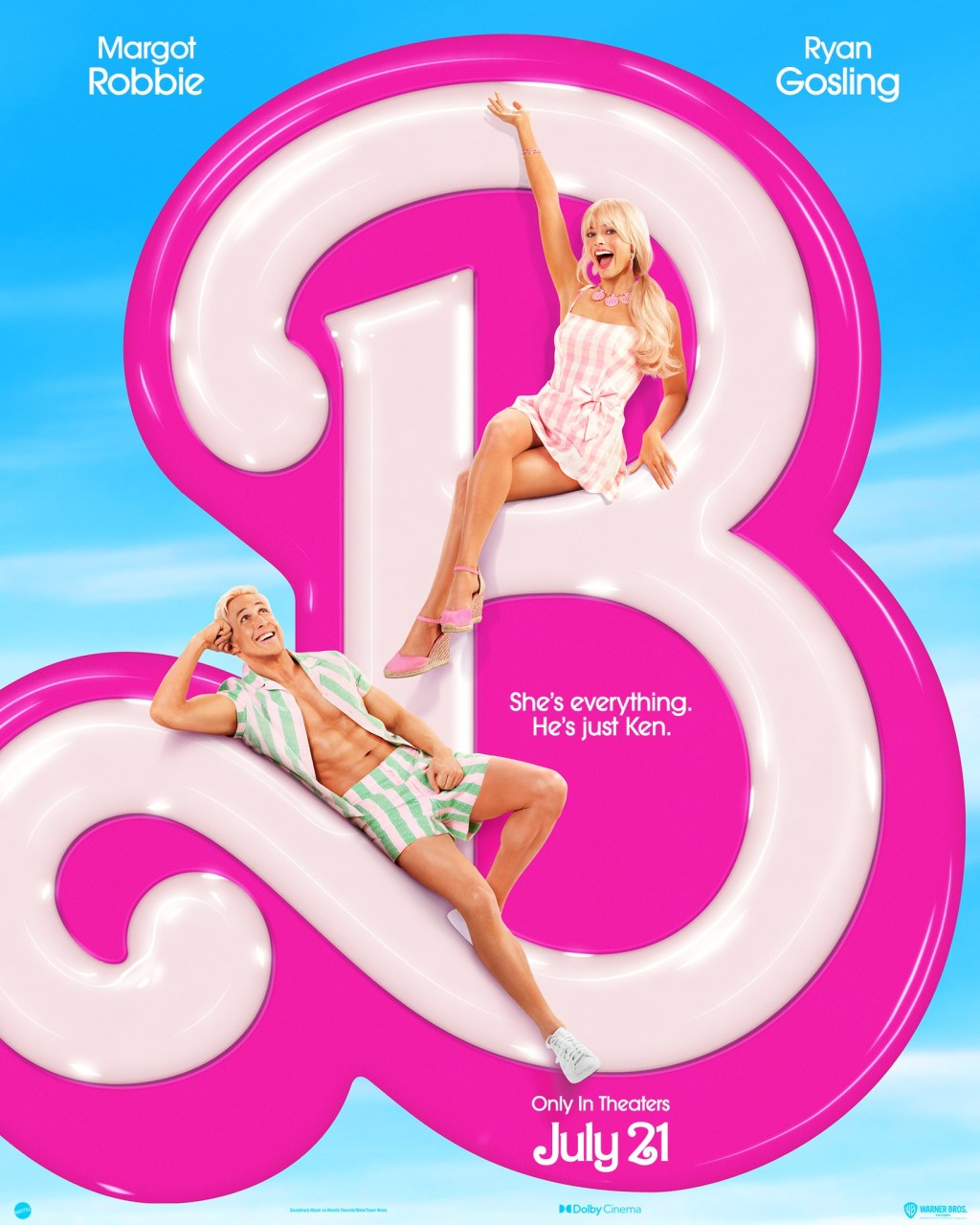
That being said, the best place to start is with Barbie (Margot Robbie) and Ken (Ryan Gosling). Robbie plays “Stereotypical Barbie,” aka the generic Barbie you think of when someone says “Barbie.” She makes mention of this multiple times throughout the film. Barbie is immediately more or less anti-Ken from the beginning. Not that she hates him (or any of the Kens), and despite actually saying they were boyfriend and girlfriend, Ken feels what he thinks is love for Barbie while she feels nothing but acquaintanceship for him. He’s barely a friend. If she’s generic Barbie, and he’s generic Ken, and he feels something for her, she should feel something for him by the rules of the film. The movie still could have gone exactly how it went, but perhaps with a little more on Barbie shifting on her feelings that causes Ken to feel dejected. But to not really care about him from the start seemed weird.
Ken’s story is basically he feels hurt and dejected by Barbie and how she treats him (which is part commentary on “friend zoning/nice guys” and a reversal of gender role expectations in society). There’s a good opportunity here to simultaneously explore not only toxic masculinity and female empowerment but also unjust expectations of men in modern society, which it came near Ken’s emotional breakdown, but it’s just kind of tossed aside by a comedic line rather than explored. While the ultimate message they went for is fine (individuality and self-empowerment and all that), the lack of exploration of the societal problems with gender as a whole wasn’t just a missed opportunity but actually a bit counter-productive to the film.
Barbie has a good emotional journey, though her solution to the problem is essentially just the exact same problem but the women doing it instead of the men and a very brief “Well, sorry how I treated you” (which if it was a reversal of norms satire, that gets kinda weird and insulting to everyone involved). And the movie, again, had a really good opportunity to explore themes of equality (which it even talked about at the beginning and ultimately shows it as nonexistent) and just replace the problem with another side of the same coin. If you’re wanting to show off feminism, going the “women are gonna rule, and men are going to see how it feels to be treated the way we were” route is NOT the way to do it.
At some point we go to the Real World, which is maybe all of 15-20 minutes of the movie and really has no major purpose for existing outside of creating a reason for chaos to ensue later. We’re introduced to a few new major characters including a mom (America Ferrera) and her tween daughter (Ariana Greenblatt), as well as Will Ferrell’s Mattel CEO.
One of the first things to really tilt my head was the heel-turn of the tween’s character arc. Her character basically starts as one way and immediately goes a different direction with absolutely no reasoning or growth or development. There could have been an absolutely lovely/heartbreaking mother/daughter relationship explored and a real emotional journey, but they really don’t serve a huge purpose outside of being general plot devices. Will Ferrell also disappears for a significant part of the film despite being set up as an antagonist–he has no actual part to play the climax or really any conflict of the film. And the decision he comes to at the end isn’t even explored after the fact.
The idea that these characters’ arcs are being left unfulfilled or being a direct disservice to the themes and ideas the movie is attempting, as well as characters being used simply as a plot device, cannot be further exemplified than in that of Allan (Michael Cera). At one point near the end, I hear my teen daughter say “Justice for Allan,” and I couldn’t agree more. Allan is played like the forgotten friend/character than nobody cares about, but instead of doing anything about that (or connecting it to the individuality themes of the ending), the movie would rather (maybe purposefully?) keep treating Allan as forgotten. Near the climax, there’s a bit where Allan becomes a focal point and starts having a fun arc… only to be completely and immediately dropped for the remainder of the movie (he even goes MIA for the next chunk of film). Yet again, they could have done some good stuff with the character, and the movie just drops the ball.
Overall, that’s just what this movie feels like: missed opportunities to be way better with stronger themes and better character arcs, which overall does a disservice to the film as a whole. I know some of the stuff I said was basically “this Barbie movie needs more men-centered themes,” but I only say that because of the themes it DOES offer, they work as a disservice to the overall message being presented and could have made stronger points focusing on equality and the overall issues with gender norms/politics on both sides and calling it out as a whole than sticking with “it sucks to be women because men suck so let’s make it suck to be men and utilize arguments from anti-feminists.” It throws a lot of ideas at the wall that weren’t fully explored, might toss a line or two to appease people, and is a little messy because of it.
But like I said: I liked it. It’s funny and has a charm to it and is full of easter eggs if you’re a Barbie history fan. I don’t know how much rewatchability it has, though, especially since I think the faults will become more apparent the more it’s seen. And don’t get me wrong–it definitely says some great things, too. There was more than one moment where I was glad at least one of my daughters was hearing what was being said (the younger one was bored out of her mind, though not entirely a fault of the film’s). And there were some moments even I connected to and felt emotionally connected to the things being discussed. I think it’s a good movie held back from greatness by some questionable writing decisions with character arcs and a general juggling of themes it doesn’t entirely know what to do with and fumbles a few.


 Rabbit Hole Podcasts
Leave a reply to Grace Cancel reply